Baggage security is no longer a detail: it's a system. Between the cabin, the hold, stopovers and transit areas, an organized traveler puts in place several levels of protection to reduce the real risk of baggage theft at the airport and unpleasant surprises.
Summary
Introduction
The real risks: understanding airport baggage theft
TSA padlocks: how they work and their actual usefulness
Suitcase strap: smart additional protection
Suitcase cover: physical protection and discretion
Luggage tag: what information should it include?
Anti-theft and cabin security backpack
Passport protector and document security
Detailed errors that negate all baggage security
Comparative analysis of solutions
Travel safety checklist
Baggage security FAQ
Introduction
Baggage security has become a major concern for travelers. With the increase in incidents related to lost, misclaimed, and stolen luggage at airports , it is essential to protect personal belongings in a simple, consistent, and effective way.
The cabin and the hold present different risks: in the cabin, you're more at risk of stealth and forgotten items; in the hold, you're more at risk of handling, abrasion, and sometimes having to open it for technical inspections. The goal: to reduce the risk without complicating your experience.
The real risks: understanding airport baggage theft
Opportunistic theft
Opportunistic theft is one of the most frequent risks: a bag left unattended for a few seconds, a partially opened suitcase, an accessible pocket. High-risk areas include security checkpoints, departure lounges, and long layovers.
Accidental opening
An overloaded suitcase, a zipper under tension, a sudden movement: accidental opening happens faster than you think. That's precisely where the combination of a TSA lock and a suitcase strap becomes essential.
Incorrect identification
Misidentification is a common cause of "mistaken" luggage. A clear luggage tag plus a distinctive feature (color, cover) greatly reduces confusion on the baggage carousel.


TSA padlocks: how they work and their actual usefulness
A TSA lock provides mechanical protection and compatibility with certain inspection protocols. It doesn't make luggage tamper-proof, but it increases the cost and time required to access the contents and prevents damage during security checks.
How does a TSA lock work?
A TSA lock engages like a regular combination lock, but it can be opened by authorized agents with a device designed for inspection, and then re-closed without breaking the system.
Is it mandatory?
No, it is not generally mandatory. However, it is strongly recommended in the hold, especially on international routes and at hubs with more frequent inspections.
Difference between a standard padlock and a TSA lock
| Criteria | Classic padlock | TSA padlock |
|---|---|---|
| Inspection / control | Risk of breakage if opening is necessary | Opening possible without destruction |
| Visual deterrent | Variable | Good (recognizable TSA logo) |
| Recommended use | Cabin / basic use | Hold / International travel |
Suitcase strap: smart additional protection
The suitcase strap acts as both a mechanical reinforcement (stabilizing the closure) and a visual marker (deterrent + identification). For a simple strategy: strap + padlock = double barrier.
Suitcase cover: physical protection and discretion
The suitcase cover protects against scratches, bumps, and dirt, and contributes to visual identification. Depending on the model, it also reduces the direct visibility of certain zippers.
Luggage tag: what information should it include?
A luggage tag should help you recover lost luggage without exposing your privacy.


What you need to write
Name, phone number, email address. That's enough to be contacted quickly.
What not to write
Avoid sharing your full address and private information. The less data you expose, the less risk you create.
Anti-theft and cabin security backpack
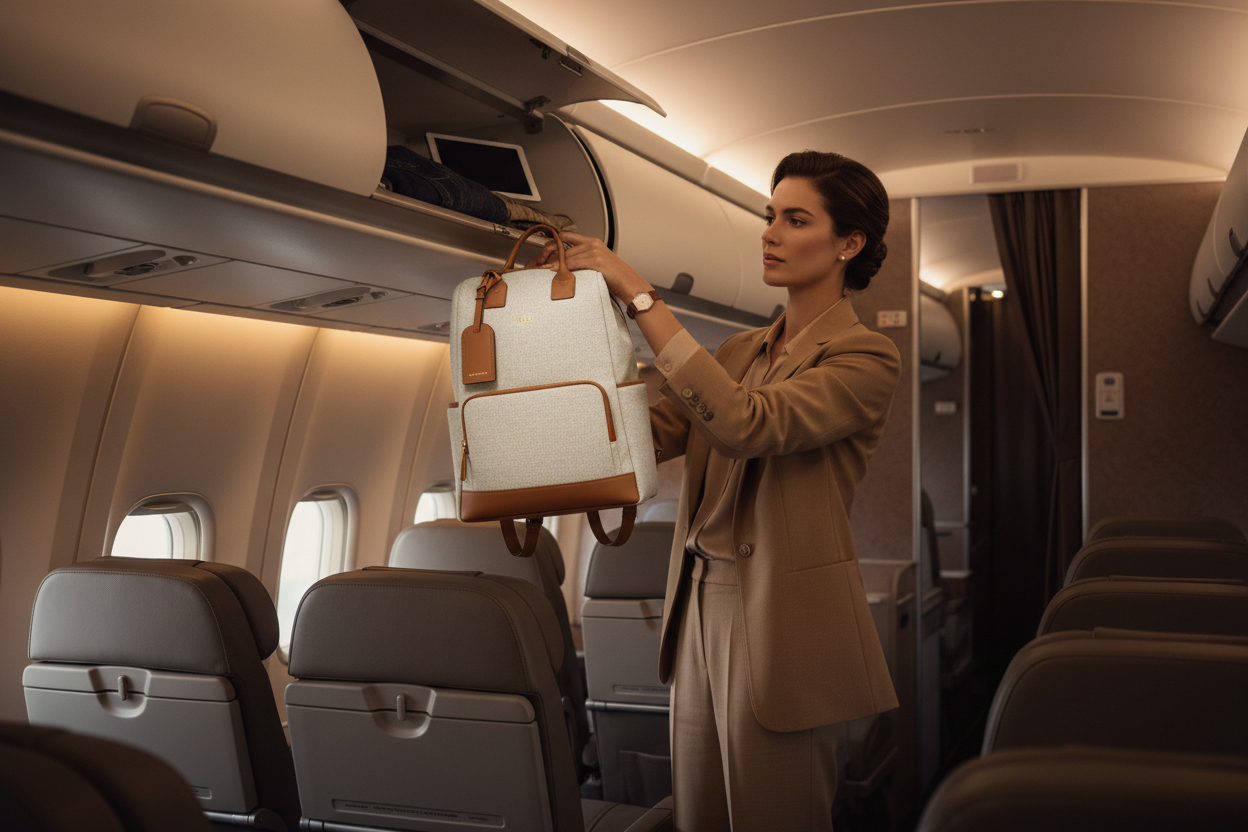
In the cabin, the best protection remains a structured and well-organized bag. A well-designed travel backpack (compartments, back pockets, organization) reduces forgotten items and limits unwanted access.


Passport protector and document security
A passport holder centralizes documents and can integrate RFID protection to reduce the risk of unauthorized reading of certain data.
Detailed errors that negate all baggage security
Even with good accessories, some mistakes can ruin everything. Here are the most common (and most expensive) ones.
1) Fragile or poorly locked padlock.
A low-quality padlock can be easily forced. Check the lock before recording.
2) Label too informative.
Keep only the minimum useful information: name + phone number + email address.
3) Negligence during a stopover.
Stopovers are when attention wanes. Keep essentials in the cabin.
4) Overloaded luggage.
The more strain is placed on the luggage, the more vulnerable the closure becomes. Appropriate capacity remains the primary protection.
5) Put everything in the same place.
Organize wisely: documents, cards, money. Keep a backup solution (digital copy).
Comparative analysis of solutions
The best luggage security relies on several layers. Here's a simple grid to help you decide what to prioritize.
| Solution | Role | Real impact | Priority |
|---|---|---|---|
| luggage tag | Identification | Reduces recovery errors | Essential |
| TSA padlock | Mechanical protection | Deterrence + prevents breakage during inspection | Highly recommended |
| suitcase strap | Reinforcement + deterrence | Stabilizes, marks, deters | Recommended |
| suitcase cover | Physical protection | Preserves + identification | Optimization |
| passport protector | Documents | Less forgetfulness, more control | Essential |
| travel backpack | Cabin | Reduces the risk of discreet theft and forgetfulness. | Highly recommended |
Travel safety checklist
- Check the TSA lock (code, locking mechanism)
- Install a properly fitted suitcase strap
- Check the condition of the suitcase cover
- Attach a luggage tag (minimal information)
- Centralize the documents in a passport holder
- Keep valuables in the cabin in a travel backpack
Cabin backpacks designed for enhanced security while traveling
When you travel regularly, security becomes just as important as capacity or comfort. A well-designed cabin backpack should protect your belongings from unauthorized openings, theft attempts, and unauthorized handling during security checks.
For active protection in urban environments or airport transit, the Nomad Shield™ Anti-Theft Backpack features a concealed locking system and a structure designed to limit external access. It's a strategic choice for travel on the subway, transfers, or in crowded areas.
In a more versatile cabin + business approach, the Travel Backpack | AirShield Pro™ offers a compartmentalized and secure design, ideal for carrying a laptop, documents and sensitive accessories while maintaining a structured organization.
For travelers seeking a balance between cabin baggage compliance and enhanced protection, the AirVault travel backpack offers a robust design and optimized access, minimizing accidental openings during transport. Meanwhile, the SkyBiz travel backpack is geared more towards professionals who want to combine the security of their electronic devices with comfortable, extended wear.
Choosing a safety-oriented model doesn't mean sacrificing ergonomics. Bags like the Aero Trek™ Cabin Backpack combine reinforced back support and protected compartments, allowing you to travel with peace of mind, even during long layovers or intensive travel.
Baggage security FAQ
What type of padlock is recommended for hold luggage?
A TSA lock is recommended: it secures the luggage while limiting damage during an inspection.
Is it necessary to use a suitcase cover?
It's not mandatory, but a suitcase cover protects against scratches/bumps and helps identify your luggage.
What should I do if my luggage is lost?
Report immediately to the airline's baggage service (before leaving the airport), then keep the evidence (check-in tag, photos).
How can I secure my travel documents?
Use a passport holder to centralize your passport, boarding pass and reservations, and limit the risk of forgetting anything.
What are the advantages of a suitcase strap?
The suitcase strap acts as a deterrent, stabilizes the closure, and facilitates identification. Very useful in the hold and during layovers.
Useful links: back to summary · Organized getaway · Travel packing